
When discomfort won’t settle, explore our dry eye treatments in Melbourne

Discover how specialised treatments may help restore balance to your eyes

When discomfort won’t settle, explore our dry eye treatments in Melbourne

Discover how specialised treatments may help restore balance to your eyes

With dry eye treatment, many people experience greater eye comfort

Learn how these gentle, in-clinic treatments work, who they may suit, and what to expect during your visit
Dry eye is a common condition that occurs when your eyes don’t produce enough tears, or when the quality of your tears doesn’t keep the surface of the eye adequately lubricated. This can lead to symptoms such as irritation, redness, stinging, or a gritty sensation.

Tears play a vital role in maintaining eye health by keeping the surface of the eye smooth, protecting against infection, and helping to wash away dust and debris. When this balance is disrupted, it can affect both comfort and visual clarity.

Not everyone experiences dry eye in the same way. Symptoms can vary in type and severity, and may come and go throughout the day.

If you’re experiencing any of the following, you may be affected by dry eye:

  • A stinging, burning, gritty, or scratchy feeling in your eyes
  • Stringy discharge or mucus around the eyes
  • Sensitivity to wind, smoke, or dry environments
  • Tired or fatigued eyes, especially when reading or using a screen
  • Sensitivity to light (photophobia)
  • Redness or inflammation of the eyes
  • A feeling like something is in your eye (foreign body sensation)
  • Discomfort when wearing contact lenses
  • Excessive tearing or watery eyes at times
  • Blurred or fluctuating vision, especially at the end of the day or after extended focus

If these symptoms sound familiar, a dry eye assessment can help identify the cause and explore personalised options for relief.

Dry eye can be caused by a range of factors that reduce tear production or affect tear quality. These include:

  • Ageing – Tear production tends to decrease naturally as we get older
  • Hormonal changes – Especially around menopause
  • Screen use – Prolonged time on digital devices can reduce blink rate
  • Medical conditions – Such as autoimmune diseases (e.g. rheumatoid arthritis), thyroid disorders, and diabetes
  • Medications – Including oral contraceptives, antidepressants, antihistamines, beta-blockers, diuretics, and retinoids
  • Environmental conditions – Like wind, air conditioning, dry indoor air, or low humidity
  • Irritants – Such as cigarette smoke, dust, or chemical exposure
  • Eyelid issues – Including blepharitis (inflammation of the eyelids), ectropion (outward turning of the eyelid), or previous trauma to the eye
  • Infrequent or incomplete blinking – Often associated with concentrated tasks or screen time
  • Previous eye procedures – Including laser vision correction or cataract surgery

Understanding what may be contributing to your symptoms is the first step in tailoring a treatment or management plan that suits your individual needs.

Managing dry eye starts with understanding the underlying cause of your symptoms.

At your initial assessment, an optometrist will examine your eyes and create a personalised treatment plan designed for your specific type of dry eye.

At-home support may include:

  • A tailored dry eye relief pack for home use
  • Recommended over-the-counter or prescription lubricating eye drops
  • Specific tear supplements based on your individual eye needs

Specialised Procedures, offering innovative treatments:

  • BlephEx treatment
    • BlephEx® is an in-clinic procedure used to support the management of dry eye and blepharitis. It works by gently exfoliating the eyelid margins to help remove debris, bacteria, and biofilm that can build up over time and contribute to inflammation, irritation, and dryness.
    • During treatment, your optometrist will use a specialised handheld device to clean the base of your eyelashes and eyelid margins. This helps reduce symptoms associated with eyelid inflammation and supports ongoing eyelid hygiene as part of your dry eye management plan.
    • The procedure typically takes 10 to 20 minutes and is generally well tolerated. Some patients describe a tickling sensation during treatment. Your optometrist may recommend BlephEx® every 6 to 12 months depending on your symptoms and treatment response.
  • Intense pulsed light therapy (IPL)
    • Intense Pulsed Light (IPL) therapy, also known as Optimal Power Energy®, is a non-invasive light treatment used to support the management of certain types of dry eye. It works by delivering brief pulses of light to targeted areas of the skin, helping reduce inflammation around the eyelids and supporting the natural function of the meibomian glands.
    • IPL may be recommended when inflammation is contributing to dry eye symptoms. It is usually performed as a series of sessions, with the number and frequency tailored to your condition.
    • IPL is not suitable for all patients. Your optometrist will assess whether this treatment may be appropriate for you.
  • Meibomian oil gland expression
  • Light Modulation® Low Level Light Therapy (LM® LLLT)
    • Light Modulation® LLLT is a form of low-level red light therapy designed to help support the management of dry eye by gently warming the eyelid tissues. This can aid in meibomian gland function and reduce discomfort associated with some types of dry eye.
    • This treatment is non-invasive and may be used on its own or as part of a broader management plan. It is often delivered over a short series of in-clinic sessions, with your optometrist guiding whether it may benefit your condition.
  • Punctal plugs for those with more severe or persistent dry eye
    • Punctal plugs are one option used to help manage dry eye symptoms. They work by conserving the eye’s natural tears and reducing tear drainage, which can assist in maintaining moisture on the eye’s surface.
    • Your optometrist will assess whether punctal plugs may be appropriate for your condition. If recommended, a plug is gently placed into the tear duct (punctum) using a specialised applicator. The eye area is cleaned and anaesthetic drops may be used to ensure comfort during the procedure.
    • The type and size of the plug are selected based on your individual needs. In most cases, punctal plug insertion is a quick, in-clinic procedure designed to complement other forms of dry eye management.

Feel more comfortable in 3 simple steps

Dry eye can be frustrating and confusing. We’ve made the path to healthier, more comfortable eyes easy to follow

Step 1: GET IN TOUCH

Not everyone experiences dry eye for the same reason. The first step is an assessment to understand what’s causing your symptoms. This may include questions about your lifestyle, screen use, and eye health. The goal is to get clear answers and decide whether treatment could help improve your comfort.
Step 2: WE’LL MEET

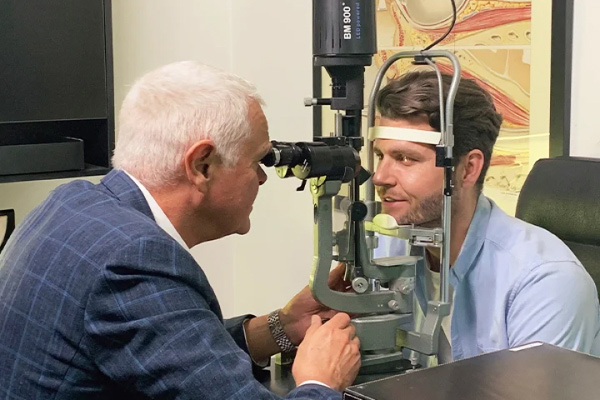
At your assessment, we take the time to listen. We explain what’s happening with your eyes and talk through suitable treatment options. You’ll leave knowing what may help, what to expect, and how to manage your symptoms safely.

Step 3: ENJOY COMFORT

After treatment, many people notice their eyes feel more comfortable and less irritated during daily activities. The aim is long-term relief, better eye health, and fewer interruptions caused by dry, sore eyes.


Tired of sore, dry eyes slowing you down?

Tired of sore, dry eyes slowing you down?

Take a free online assessment to see if dry eye could be affecting your comfort and daily life

Hi, I’m Dr Rick Wolfe.

I’ve been performing laser vision correction and cataract surgery in Melbourne since 1991, with more than 30,000 procedures completed.

As a Fellow of RANZCO, I’ve dedicated my career to advancing eye surgery techniques in Australia and internationally.

I regularly share my knowledge at global conferences and founded the World College of Refractive Surgery and Visual Sciences to support excellence in our field.

My goal is simple: to provide safe, precise, and personalised care that helps people enjoy clearer vision.

Every patient is unique, and I take pride in tailoring treatment to individual needs.

Dr Rick Wolfe

Owner, Founder and Surgeon at Vista Eyes Laser Eye Clinic
Ophthalmologist and Laser Eye Surgeon, MB BS, FRANZCO, FWCRS